Learn Quran Online: A Complete Guide
Learning Quran online means taking live, one-on-one classes with a real teacher over video call, not watching pre-recorded lessons. Done properly, it works for reading, Tajweed, and full memorization (Hifz), for kids and adults alike. This guide walks through exactly how it works, what you need, how to tell a genuine teacher from a random tutor, and what it costs.
Meet Your Certified Teachers

Shah Zaib
Founder & Head Teacher · Wifaq ul Madaris · 6+ yrs experience

Muhammad Umair
Tajweed & Hifz Specialist · Certified
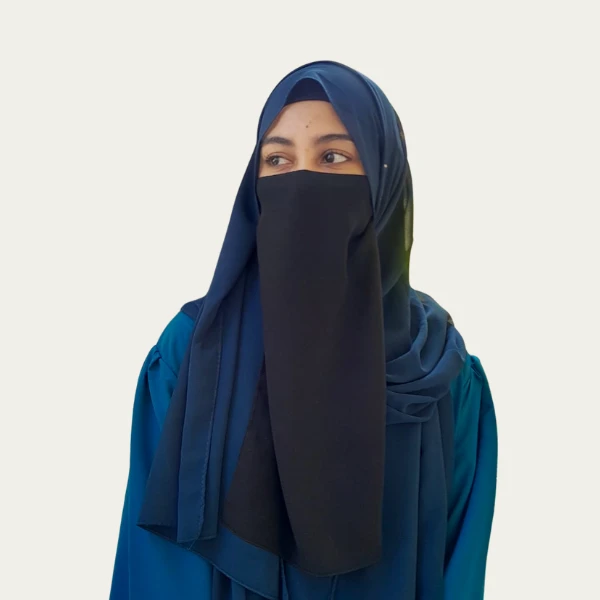
Almas Fatima
Female Teacher · Sisters & Children · Qaria e Quran
Does Learning Quran Online Actually Work?
If you grew up with a Quran teacher who sat physically next to you, correcting your mistakes by tapping the page, it's a fair question. The short answer: what made that method work wasn't the room you were both sitting in, it was that a qualified teacher was listening to you recite in real time and correcting you immediately. A live video call does exactly that. Your teacher hears every word, stops you the moment a Tajweed rule is missed, and repeats a verse with you until it's right, the same as they would across a table.
What online can't do is put a teacher physically in your home. For the vast majority of Muslim families in America, that was never actually on offer, either because there is no qualified Quran teacher nearby, or because the only options are an overcrowded weekend class or a rotating cast of unverified tutors. Online doesn't compete with an ideal in-person teacher who doesn't exist in your city. It competes with, and usually beats, the realistic alternative: driving further than makes sense, or getting whoever happens to be available.
The part that genuinely does need care is who is teaching, since video calls make it just as easy to hide a lack of qualification as they do to deliver a great lesson. That's covered further down.
What Happens When You Start
No hidden steps, no long onboarding. Here's the entire process from first click to your first regular class.
Book a Free Trial Class
Tell us your (or your child's) age and current reading level, and your preferred time in your own time zone. No payment is taken at this stage.
Meet Your Teacher Live on Zoom
A certified teacher runs a full, live one-on-one lesson so you can hear their teaching style and see how they interact, before you commit to anything.
Start a Regular, Structured Schedule
If it's a good fit, you set a recurring weekly time. Lessons build on each other with real progress tracking, not a random grab-bag of topics.
What You Actually Need to Get Started
Any device with a camera
A laptop, tablet, or smartphone works fine. Nothing needs to be new or high-spec.
A normal home internet connection
Standard home Wi-Fi or a phone data plan is enough for a stable video call.
A reasonably quiet 30 minutes
No soundproofing required, just somewhere the teacher can hear recitation clearly.
Zoom installed (it's free)
We share reading material and the Quran text on-screen, so nothing needs to be printed or shipped.
Which Course Should You Start With?
Most students fall into one of these starting points. If you're not sure, say so when you book your trial and the teacher will place you correctly in the first lesson.
Noorani Qaida
Complete beginners of any age: Arabic letters, vowels, and basic reading rules from scratch.
Tajweed
For those who can already read Quran but were never taught the rules of correct recitation.
Hifz (Memorization)
A structured memorization program with revision cycles, for students ready to commit.
Quran for Adults
Self-paced, judgment-free classes designed specifically for adult learners and new Muslims.
Also teaching Arabic Language, Islamic Studies, and a dedicated track for reverts. See every course
How to Tell a Real Teacher From a Random Tutor
A video call makes it easy for anyone to claim they can teach Quran. Before you commit to any academy, online or not, we'd suggest asking these four questions:
Which institution certified them, specifically?
A named, checkable credential — not just "certified teacher" as a general marketing line.
Can a parent sit in on the class?
A legitimate academy should welcome this without hesitation, especially for younger children.
Is there any private contact outside class?
There shouldn't be. All communication should stay within scheduled, structured lessons.
What happens if the fit isn't right?
You should be able to change teachers without friction. Not every pairing works on the first try.
At Ease Quran, every teacher is certified by Wifaq ul Madaris Al-Arabia, parents are welcome to sit in on any class, and we publish our full approach on our Child Safety & Parent Rights Policy page. A female teacher is also available for sisters and children — see our Female Quran Teachers page.
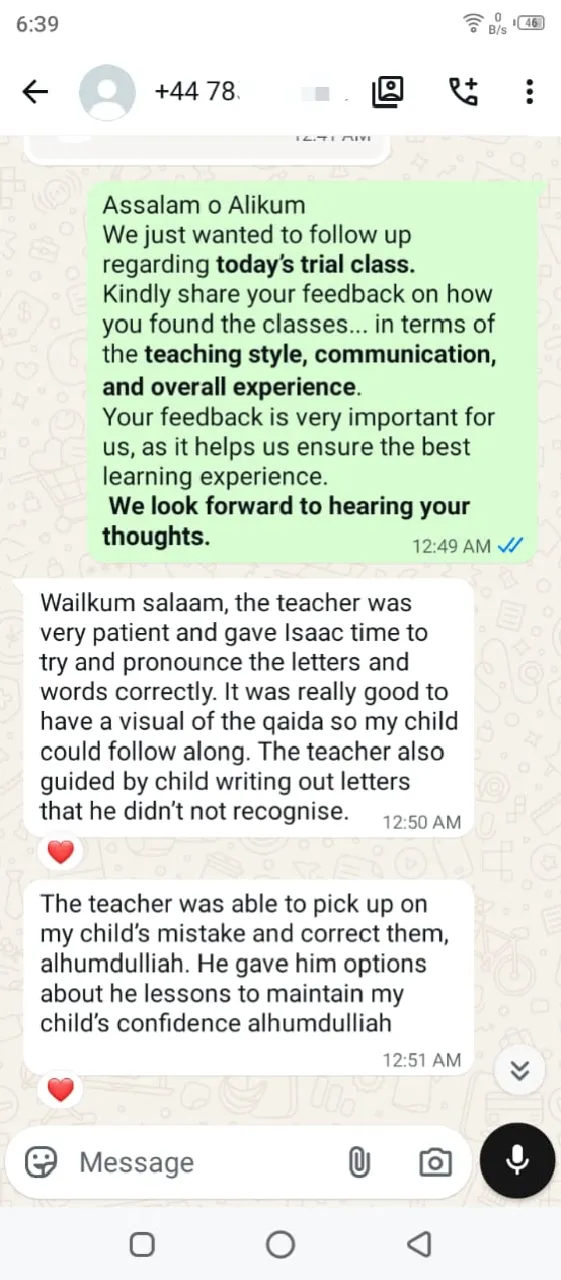
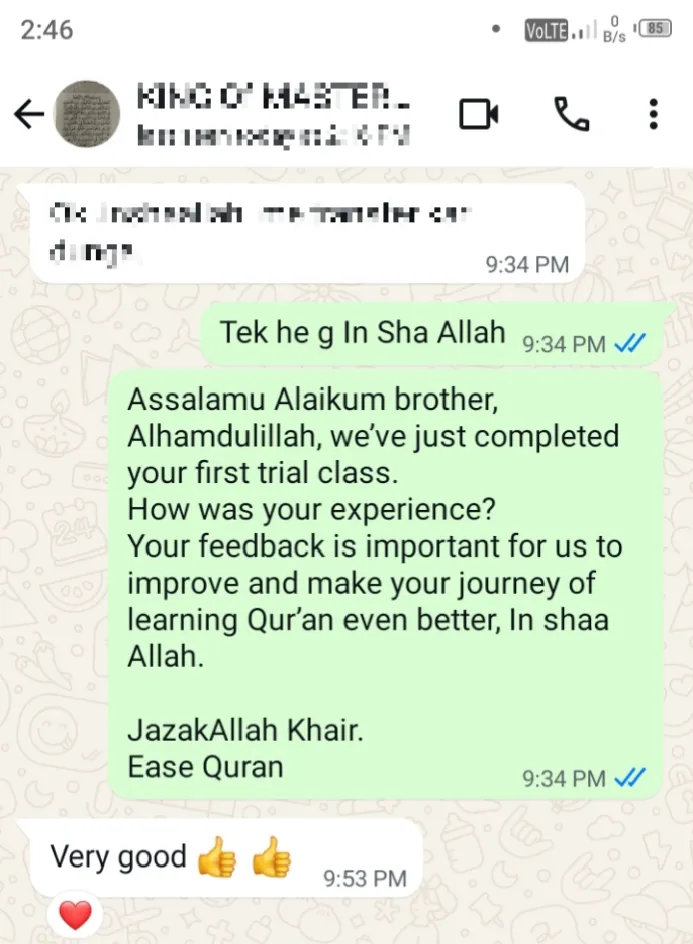
Real Students, Real Results
We've taught Western, English-speaking students across the UK and USA.
Still Searching for a Teacher “Near You”?
If part of you is still looking for something local, that's completely understandable — see how Ease Quran serves your specific city or state on our Locations page, including the Muslim community context for over 70 cities and states across America.
Frequently Asked Questions About Learning Quran Online
Ready to See How a Real Class Feels?
One live, one-on-one trial class with a certified teacher. No credit card, no obligation to continue.
Free first class • No credit card required • Cancel anytime